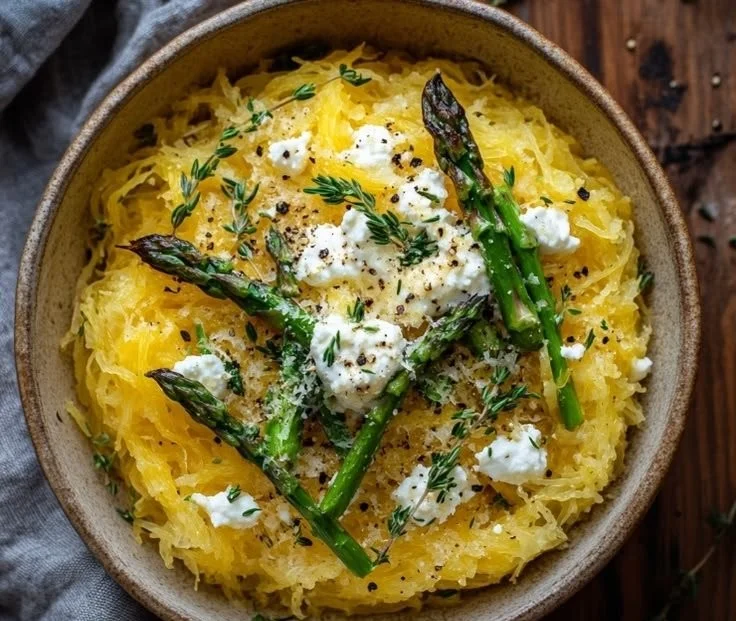
There’s something magical about the changing seasons, and with each passing day, the whisper of spring brings a sense of freshness and lightness, especially to our plates. As I stroll through my local farmers’ market, the first bundles of asparagus beckon to me, their vibrant green reminding me that it’s time to celebrate new beginnings. One of my favorite ways to showcase this seasonal gem is in a dish that marries textures and flavors in a delightful crescendo: Spaghetti Squash with Asparagus, Ricotta, Lemon, and Thyme.
This recipe not only makes use of bright, tender asparagus but also celebrates the unique, noodle-like strands of spaghetti squash—which is both satisfying and light. Picture this: you slice open the spaghetti squash, and those lovely, golden strands emerge, ready to be dressed in a creamy ricotta mixture infused with zesty lemon and fragrant thyme. Trust me when I say, cooking this dish is like inviting spring into your kitchen!
Recipe Timing
- Prep Duration: 10 minutes
- Active Cooking: 30 minutes
- Total Duration: 40 minutes
- Portion Size: Serves 4
- Complexity: Simple
Nutritional Recipe
- Calories per portion: Approximately 250
- Protein: 10 grams
- Carbs: 20 grams
- Fats: 14 grams
- Fiber: 5 grams
- Sugars: 3 grams
- Sodium: 200 mg
Why You’ll Love This Spaghetti Squash with Asparagus, Ricotta, Lemon, and Thyme
You’re in for a treat! This dish not only dazzles the eyes with its vibrant colors but also offers a harmonious blend of flavors. The nutty, earthy taste of spaghetti squash paired with the crispness of freshly cooked asparagus becomes a canvas for the luscious ricotta, which lightens up every bite. And let’s not forget the kick of fresh lemon and savory thyme—together, they elevate this dish from simple to sensational. It’s perfect as a light lunch, a lovely dinner, or even an impressive side at your next gathering.
The Complete Cooking Journey
Creating this delightful dish is a breeze. With minimal prep and straightforward steps, you’ll find yourself enjoying a fresh, healthy meal in no time. Don’t be surprised if you find yourself going back for seconds—not just because it’s delicious but because it’s that easy to make!
Ingredients:
- 1 medium spaghetti squash (cut in half, seeds scooped out)
- 1 bunch asparagus (trimmed and cut into 2-inch pieces)
- 1 tablespoon olive oil (for coating)
- 0.5 teaspoon salt
- 0.25 teaspoon black pepper
- 1 cup ricotta cheese (creamy)
- 1 lemon (zested and juiced)
- 1 teaspoon fresh thyme leaves (picked from the stem)
- 2 tablespoons water or broth (for pressure cooking)
Method:
Step 1: Prepare the Spaghetti Squash
Start by cutting your spaghetti squash in half and scooping out the seeds. This humble veggie is the star of our show, so give it a little love!
Step 2: Pressure Cook the Squash
Place each half of the squash in your pressure cooker with 2 tablespoons of water or broth for moisture. Set the cooker to high pressure for about 8 minutes. As it steams, the squash will transform into delightful strands that mimic spaghetti.
Step 3: Roast the Asparagus
While the squash cooks, preheat your oven to 400°F (200°C). Toss the trimmed asparagus with olive oil, salt, and pepper, then spread it out on a baking sheet. Roast for about 15 minutes until tender and slightly crispy on the edges.
Step 4: Whip Together the Ricotta Mixture
In a bowl, combine the creamy ricotta cheese with lemon juice, zest, and fresh thyme leaves. Mix well until smooth and creamy; this will add a rich dimension to your dish.
Step 5: Fluff the Squash
Once the pressure cooker beeps, carefully release the steam and remove the squash. Using a fork, gently scrape the insides to create those lovely pasta-like strands.
Step 6: Combine Everything
In a large bowl or directly in the squash shells, mix the fluffy spaghetti squash with the roasted asparagus and the ricotta mixture. Toss lightly until well incorporated, ensuring every bite is packed with flavor.
Step 7: Final Touches
Adjust the seasoning to taste, and garnish with additional thyme leaves or a sprinkle of Parmesan cheese if desired.
Step 8: Serve and Savor
Spoon generous portions onto plates and enjoy, basking in the freshness of the season with every single forkful!
Serving Suggestions & Pairings
This dish shines on its own, but it’s equally happy on a table alongside a simple green salad dressed with vinaigrette or even a lightly grilled chicken breast for added protein. Drizzle with extra lemon juice right before serving to bring a bright finish to the meal.
Storage & Leftovers Guide
If you happen to have leftovers (a rare occurrence!), store them in an airtight container in the fridge for up to 3 days. Reheat in the microwave or on the stovetop, adding a splash of water to keep it moist.
Kitchen Wisdom & Success Tips
- Make sure your spaghetti squash is firm and free of blemishes for the best texture.
- If you don’t have a pressure cooker, you can bake the squash in the oven for about 30-40 minutes at 400°F. Just cover it with foil to retain moisture!
- Feel free to adjust the lemon and thyme according to your taste—you may find you love an extra zing of lemon.
Flavor Variations & Adaptations
For a twist, try adding sautéed garlic or even a sprinkle of chili flakes for heat. You can also experiment with other vegetables like cherry tomatoes or spinach, which would complement the flavors beautifully.
Reader Questions & Solutions
- How do I know when the spaghetti squash is cooked properly? Look for tender flesh that easily pulls into strands with a fork.
- Can I use frozen asparagus? Fresh is best for texture, but if frozen is all you have, thaw and drain it first before roasting.
- What can I substitute for ricotta? Cream cheese or Greek yogurt can provide similar creaminess if ricotta isn’t available.
- Is this dish vegan-friendly? It can be made vegan by substituting ricotta with cashew cream or a plant-based ricotta alternative.
- Can I make this ahead of time? Yes, you can roast the asparagus and prepare the ricotta mixture ahead of time. Just combine with the squash when ready to serve!
Wrapping Up
As you embark on this culinary journey of spaghetti squash with asparagus, ricotta, lemon, and thyme, remember that cooking is all about expressing creativity and joy. Embrace the lightness of the season and let this dish radiate warmth at your table. So go ahead, grab those fresh ingredients, and savor the delightful flavors of spring. Happy cooking!
PrintSpaghetti Squash with Asparagus, Ricotta, Lemon, and Thyme
A light and flavorful dish that combines spaghetti squash with fresh asparagus, creamy ricotta, zesty lemon, and fragrant thyme, perfect for celebrating spring.
- Prep Time: 10 minutes
- Cook Time: 30 minutes
- Total Time: 40 minutes
- Yield: 4 servings 1x
- Category: Main Course
- Method: Baking, Pressure Cooking
- Cuisine: Italian
- Diet: Vegetarian
Ingredients
- 1 medium spaghetti squash (cut in half, seeds scooped out)
- 1 bunch asparagus (trimmed and cut into 2-inch pieces)
- 1 tablespoon olive oil (for coating)
- 0.5 teaspoon salt
- 0.25 teaspoon black pepper
- 1 cup ricotta cheese (creamy)
- 1 lemon (zested and juiced)
- 1 teaspoon fresh thyme leaves (picked from the stem)
- 2 tablespoons water or broth (for pressure cooking)
Instructions
- Prepare the spaghetti squash by cutting it in half and scooping out the seeds.
- Pressure cook the squash in a pressure cooker with water or broth for about 8 minutes.
- Roast the asparagus with olive oil, salt, and pepper in a 400°F oven for about 15 minutes.
- Whip together the ricotta cheese with lemon juice, zest, and thyme until smooth.
- Fluff the cooked spaghetti squash with a fork to create strands.
- Combine the spaghetti squash with the roasted asparagus and ricotta mixture in a bowl.
- Adjust seasoning to taste and garnish as desired.
- Serve and enjoy this fresh dish!
Notes
For added flavor, garnish with extra thyme or Parmesan cheese. Can be served alongside a light salad or grilled chicken.
Nutrition
- Serving Size: 1 serving
- Calories: 250
- Sugar: 3g
- Sodium: 200mg
- Fat: 14g
- Saturated Fat: 6g
- Unsaturated Fat: 8g
- Trans Fat: 0g
- Carbohydrates: 20g
- Fiber: 5g
- Protein: 10g
- Cholesterol: 40mg